Canary Media: How big can solar go? These 3 projects show us the gigascale future
published on May 19, 2026
Written by Julian Spector
Until recently, pacesetting solar projects were measured in the hundreds of megawatts. But panels keep getting cheaper, and developers keep getting better at installing them. As a result, power companies are undertaking projects that are bigger than anyone could have conceived five years ago.
China has led the way on this with a series of installations that push past the gigawatt scale. Other countries aren’t far behind, including the U.S., though it hasn’t reached the gigawatt threshold yet.
Giga-scale construction requires a whole new level of land access, workforce mobilization, and transmission planning. Collectively, these projects presage a future when the sunniest, most remote places in the world serve as electrical breadbaskets, supplying energy to population hubs far away.
Valley Clean Infrastructure Plan, California, USA: 21 GW
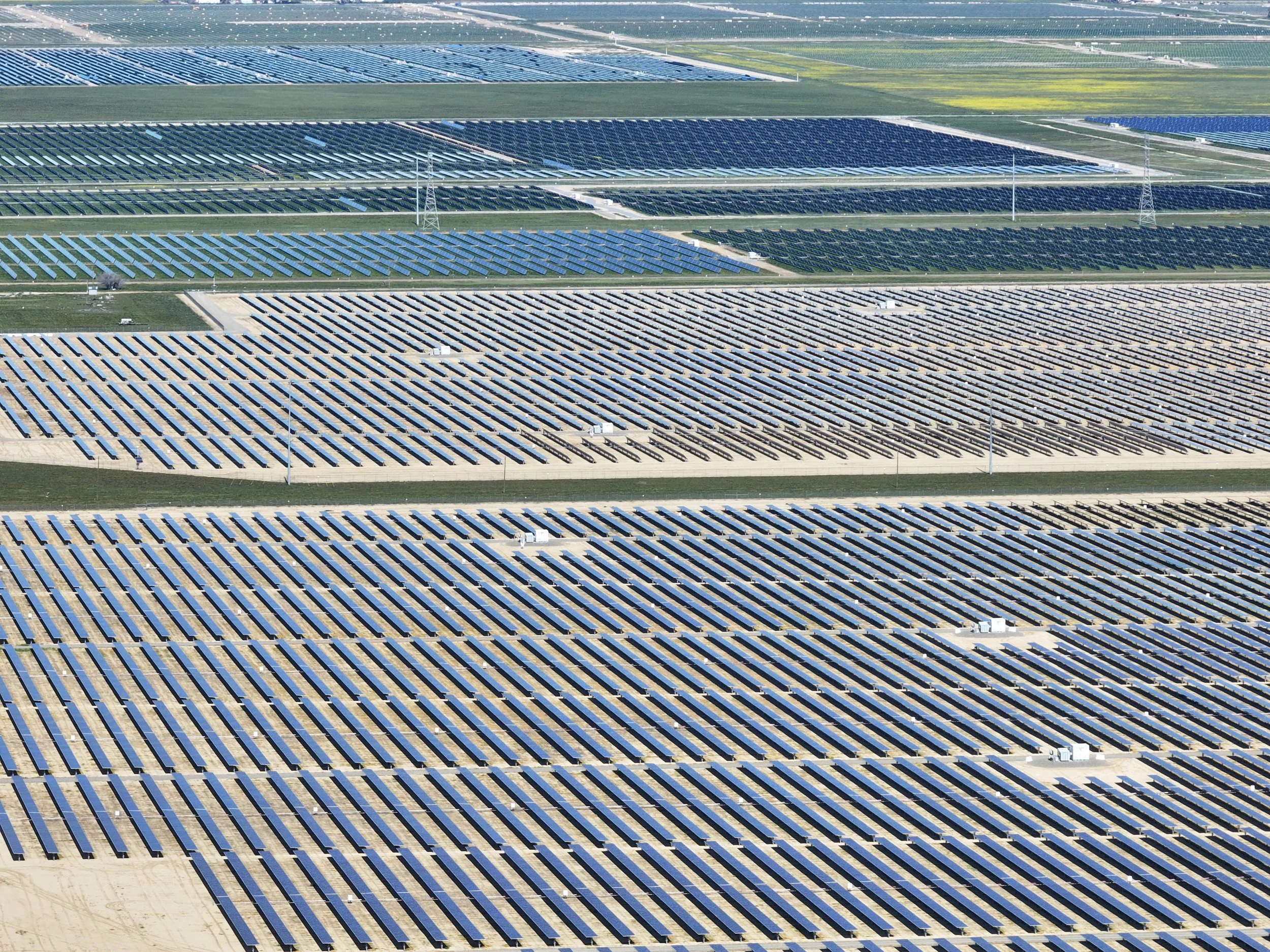
The Central Valley of California churns out one-quarter of the agricultural crop in the U.S., but its water is disappearing. The Westlands Water District has tackled this head-on with a coordinated strategy that, if implemented, would allocate fallow lands for a sprawling 21-gigawatt solar complex, served by a privately developed transmission corridor.
The scale of this would be staggering. If fully built, the Westlands effort would add as much utility-scale solar as the whole state of California has built thus far, as Canary Media’s Jeff St. John recently reported. It could give California one of the largest solar plants in the world, especially impressive given the state’s famously high cost of doing business, and the elevated solar-panel prices from U.S. trade protectionism.